How to write a greeting card message
Most people are not stuck on the card design — they are stuck on the message. This guide walks you through writing a greeting card message that sounds like you, even when the moment is awkward, sad, or weirdly formal. We use it ourselves when we are putting together CardWave templates, and we think it works for any card you sit down to write.
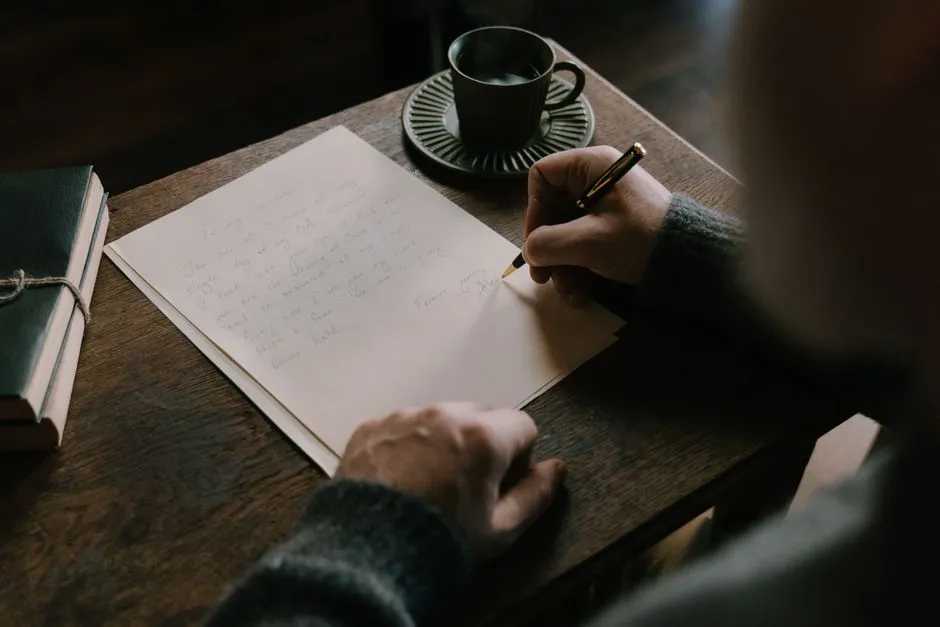
The three-line frame
A surprisingly large share of great greeting card messages follow the same shape:
- Line one — name the moment, in plain language. ("Happy birthday." "Thinking of you this week." "Congratulations on the new house.")
- Line two — name something specific you noticed about the person, the year, or the moment. This is the line that makes the card feel like it is from you.
- Line three — close with a wish or a forward-looking sentence. Short. No postscript.
That is the entire formula. Three lines is plenty. A long card is rarely the most-remembered card.
Openers that are not "I hope this finds you well"
- "I have been thinking about how to say this."
- "There is a thousand ways to say it, but here's the one that's true."
- "I wanted to write it down so you could read it twice."
- "Some things are too important to text."
- "If you only read one line of this card, read this one."
What to do when the occasion is hard
For sympathy, get-well, and apology cards, the move is almost always to slow down and say less. Acknowledge the actual thing — the loss, the illness, the mistake — without rushing past it. Resist the urge to wrap it up neatly. A short, honest line ("I'm so sorry. I'm here." or "I was wrong, and I am sitting with that.") will outperform three paragraphs of softer language every time.
What to do when the occasion is happy
For birthdays, weddings, and milestones, the move is the opposite — get specific. "Happy birthday" by itself is fine. "Happy birthday — this is the year your sourdough actually turns out, I can feel it" is the one they will keep.
Adjusting tone by recipient
The relationship sets the cadence. A card for your mom can be longer and more nostalgic. A card for your coworker should be shorter, generous, and free of inside references they would have to puzzle through. A card for your partner can be intimate without being grand — the small detail wins.
Closers that don't sound like a bank email
- "Cheering for you, loudly, even from over here."
- "Take this slowly. You earned it."
- "Sending this with the kind of love that doesn't need a long postscript."
- "Here's to a year that lives up to who you are."
If you are still stuck
Pick a card whose design feels right and use the sample wording on the card page exactly as written. There is no rule that says a borrowed line is less sincere than one you wrote at 11pm at the kitchen counter.